

Why Seniors Struggle With Stairs and When Extra Support Becomes Important

A staircase can look ordinary until it becomes the hardest part of the house.
For many older adults, stairs change from a simple daily movement into a tiring, painful, or risky task. The change may happen slowly. A person starts holding the railing more tightly. They pause halfway up. They avoid carrying laundry. They sleep downstairs “just for tonight,” then do it more often.
Stair difficulty is not a personal failure. It is often the result of normal physical changes, health conditions, medication side effects, or a home layout that no longer fits the person using it. The goal is not to take away independence. The goal is to make daily movement safer, easier, and less stressful.
This article is for general information only. It is not medical advice. Sudden weakness, dizziness, falls, chest pain, or new trouble walking should be discussed with a qualified health professional right away.
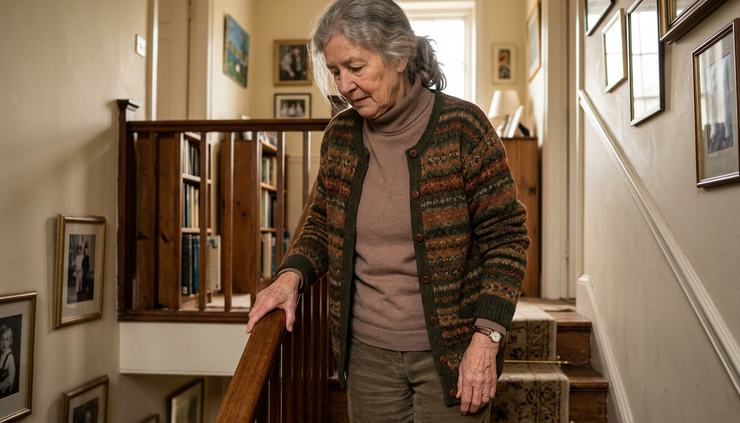
Stairs ask more of the body than they seem
Walking across a room uses balance, leg strength, vision, coordination, and attention. Stairs ask for all of that, plus more.
Each step requires the body to:
Lift one foot high enough to clear the step
Shift weight onto one leg
Push upward through the hip, knee, and ankle
Keep balance while the body moves vertically
Judge depth, edge lines, and foot placement
React quickly if the foot lands poorly
That is a lot of work for a movement many people barely think about until it becomes difficult.
Going up stairs usually demands strength. Going down stairs often demands more control. Descending can feel scarier because the body moves with gravity, and the risk of losing balance can feel more immediate. Knee pain may also feel worse on the way down because the joints help control the body’s weight with every step.
Even a short staircase can become exhausting if someone has reduced strength, poor vision, shortness of breath, or pain. Add a basket of laundry, a pet moving underfoot, or a dim hallway, and the same stairs become much harder.
Physical changes can make stairs feel unsafe
Many seniors struggle with stairs because several small changes stack up over time. One change may be manageable. Three or four together can make the staircase feel like a daily test.
Muscle loss changes how the legs work
Adults often lose muscle mass and strength with age, especially if illness, surgery, pain, or reduced activity leads to more sitting. The thighs, hips, and calves all matter on stairs.
Weak thigh muscles can make it hard to rise to the next step. Weak hips can affect balance from side to side. Weak calves can reduce push-off and control. When muscles tire quickly, a person may start climbing slowly, pulling hard on the railing, or taking one step at a time.
This kind of change can sneak up. Someone may still walk around the house well but find stairs much more demanding.
Joint pain can make every step a decision
Arthritis and other joint problems often affect the knees, hips, ankles, and lower back. A painful joint changes movement patterns. A person may shift weight away from the painful side, twist the body, or grip the railing tightly to reduce pressure.
Those adaptations may help in the moment, but they can also increase the chance of imbalance. Pain can also cause hesitation. Hesitation on stairs matters because safe stair use depends on smooth, steady movement.
Balance and reaction time may decline
Good balance depends on the inner ear, nerves in the feet, vision, muscles, and the brain’s ability to process information quickly. If any part of that system changes, stairs become more challenging.
Common examples include:
Numbness or tingling in the feet
Dizziness when standing or turning
Slower reaction time
Trouble recovering after a misstep
Fear of falling after a previous fall
Fear alone can change how a person moves. They may become stiff, look down too much, or move so slowly that balance becomes harder instead of easier.
Vision affects depth and confidence
Stairs are visual. The brain needs to see where one step ends and the next begins. Low light, glare, patterned carpet, shadows, or poor contrast can make edges harder to judge.
Vision changes related to aging can affect depth perception, contrast sensitivity, and night vision. A staircase that feels fine during the day may feel dangerous at dusk or at night.
Medications and health conditions can play a role
Some medications can cause dizziness, sleepiness, low blood pressure, or slower reaction time. Health conditions such as heart or lung disease, diabetes-related nerve problems, Parkinson’s disease, stroke effects, and arthritis may also affect stair safety.
A new struggle with stairs should not be brushed aside, especially if it appears suddenly. A medical review can help identify treatable causes, such as medication side effects, dehydration, infection, pain, or changes in blood pressure.
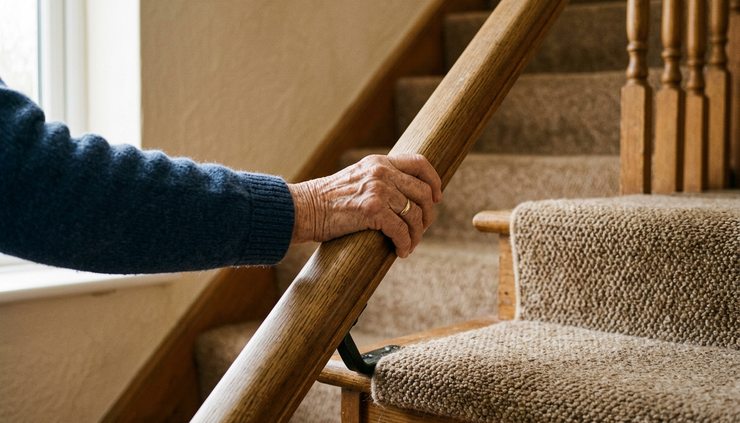
The home itself can make stairs harder
Sometimes the person is not the only issue. The staircase may be poorly suited for aging safely.
A few home features can increase risk:
No railing on one side
A single railing may not be enough for someone with weakness on one side, pain in one arm, or balance concerns.
Loose carpet or uneven treads
Anything that shifts underfoot can lead to a trip or slip.
Poor lighting
Dim bulbs, shadows, and switches located far from the stairs can make nighttime movement risky.
Clutter near the steps
Shoes, baskets, cords, and pet toys can create hazards at the top or bottom of the stairs.
Steps with poor contrast
If the edge of each step blends into the next, depth judgment becomes harder.
Stairs that turn or narrow
Curved or angled stairs can be harder to judge than straight ones, especially while carrying something.
Small fixes can help. Brighter lighting, secure handrails, non-slip treads, and clear walking paths can reduce daily risk. Still, home changes should match the person’s actual ability. If someone is already losing balance or avoiding stairs, a few quick fixes may not be enough.
Warning signs mean it is time to add support
Extra support becomes important when stairs stop being a routine activity and start becoming a barrier, a source of fear, or a repeated safety concern.
Some warning signs are easy to miss because they look like harmless habits.
Watch for patterns such as:
Pausing often on the stairs to rest
Pulling strongly on the railing rather than using it for balance
Climbing sideways or taking one step at a time
Avoiding upstairs rooms or basement areas
Leaving laundry, cleaning supplies, or personal items on one level
Feeling anxious before using the stairs
Missing steps, tripping, or stumbling
Having trouble seeing the edge of each step
Feeling dizzy, short of breath, or weak on the stairs
Having a recent fall, even if no injury occurred
One stumble does not always mean major change is needed. A pattern does. The more often stair use requires planning, effort, or courage, the more important it becomes to look at support options.
A good support plan protects independence by reducing the chance that one fall will force a bigger, faster change later.
Families often wait until after a fall to act. That is understandable, but it can make decisions harder. It is better to add support while the person can still participate in choices and practice new routines with confidence.
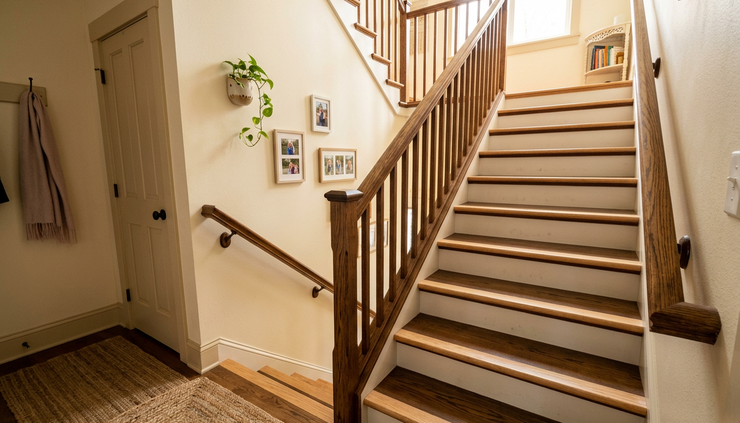
Extra support can start small
Support does not have to mean a major renovation right away. The best first step depends on the person, the home, and the reason stairs are difficult.
Start with a health and mobility check
If stair trouble is new, getting a medical opinion matters. A doctor, physical therapist, or other qualified clinician can look for causes such as strength loss, balance changes, pain, dizziness, medication effects, or nerve problems.
Physical therapy may help some people improve strength, balance, and confidence. An occupational therapist can also suggest safer ways to move through the home and use daily spaces.
This step is especially important when the person reports:
New dizziness
Sudden weakness
Shortness of breath
Chest discomfort
New confusion
A recent fall
Numbness in the feet
A quick decline in walking ability
Those signs deserve prompt attention.
Make the staircase easier to use
Home improvements can reduce hazards and make stairs less demanding.
Useful changes may include:
Adding railings on both sides
Tightening loose railings
Improving lighting at the top, bottom, and along the stairs
Adding light switches in reachable locations
Removing loose rugs near landings
Securing carpet and stair treads
Adding non-slip strips if appropriate
Improving contrast on step edges
Clearing clutter from stairs and landings
These changes are often practical, but they need to be done carefully. A loose grab bar or poorly installed railing can create false confidence. Anything meant to hold weight should be installed securely.
Change routines to reduce risk
Daily habits can also help.
For example, someone who struggles with stairs may benefit from keeping frequently used items on the main level. Laundry baskets can be smaller and lighter. A backpack or cross-body bag may keep hands free, if it is safe for that person. Heavy items can be moved by someone else.
A simple rule helps: hands should be free for the railing whenever possible.
Footwear matters too. Supportive shoes with non-slip soles are safer than socks, loose slippers, or backless house shoes on stairs.
Consider mobility aids with guidance
Canes and walkers can help on flat surfaces, but stairs are different. Using a cane on stairs requires the right technique. Walkers are usually not used on standard staircases in the same way they are used on floors.
A physical therapist can teach safe stair strategies, such as which leg leads when going up or down, how to use a cane with a railing, and when stair use is no longer advisable without direct help.
Guessing can be risky. Training helps turn an aid into real support rather than another object to manage.
Bigger changes may be needed when stairs limit daily life
Sometimes small changes do not solve the problem. If stairs continue to cause fear, pain, or near falls, the home may need a larger adjustment.
Possible options include:
Moving the bedroom to the main level
Creating a main-floor bathroom setup
Using a bedside commode temporarily after illness or surgery
Installing a stair lift, when the layout and person’s needs fit
Adding an exterior ramp for entry steps
Moving to a one-level home or more accessible housing
A stair lift can help some people, but it is not right for everyone. A person still needs to get on and off the seat safely, follow instructions, and manage the top and bottom landings. Narrow, curved, or damaged stairs may also affect whether installation is practical.
Main-level living can be a strong option when stair use has become unsafe. It may feel like a major change, but it can also preserve independence by keeping essential spaces within reach.
The key question is not, “Can this person still manage the stairs on a good day?” A better question is, “Can this person use the stairs safely on a tired day, at night, or when distracted?”
That answer often reveals the real level of risk.
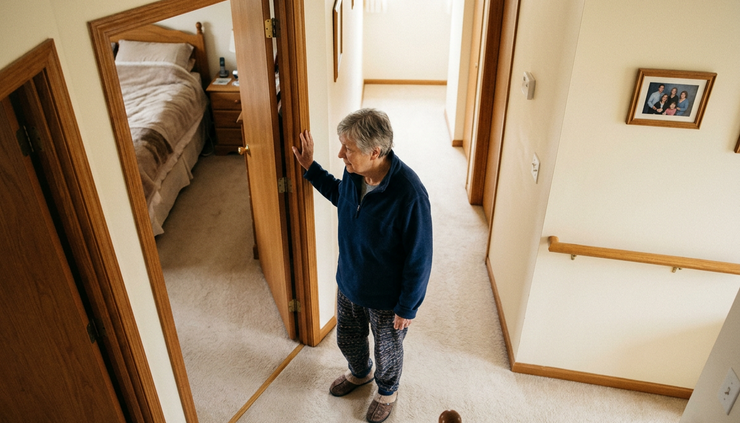
Conversations about stair support should protect dignity
Stairs can bring up strong emotions. For some seniors, needing help feels like losing control. For adult children or caregivers, the fear of a fall can create urgency. Those two feelings can clash.
A respectful conversation works better than a lecture.
Start with observations, not accusations. Instead of saying, “You can’t use the stairs anymore,” try, “I noticed the stairs seem more tiring lately, and I’m worried about how hard they are at night.”
Focus on shared goals:
Staying at home safely
Avoiding injury
Keeping access to favorite spaces
Reducing daily stress
Making the home easier to use
Offer choices whenever possible. A person may be more open to adding a second railing than discussing a stair lift right away. They may agree to better lighting before changing sleeping arrangements. Small agreements can build trust and lead to safer decisions over time.
It also helps to involve a neutral professional. A physical therapist, occupational therapist, or primary care clinician can assess mobility and explain risks without family pressure. Sometimes advice is easier to hear from someone outside the household.
The right time to act is before stairs become a crisis
Stair struggles rarely improve by ignoring them. They may stay stable for a while, or they may worsen after illness, a fall, or a change in medication. Paying attention early gives everyone more options.
Extra support becomes important when stairs cause repeated pain, fear, fatigue, avoidance, or near falls. It becomes urgent when there has already been a fall, sudden weakness, dizziness, or a major change in movement.
The best plan usually combines three things: a medical or mobility check, safer home conditions, and practical changes to daily routines. Larger changes, such as main-level living or a stair lift, may make sense when smaller steps no longer keep stair use safe.
A staircase should not decide how much of a home someone can use. With the right support at the right time, many older adults can keep moving through daily life with more confidence, less strain, and a lower risk of preventable injury.


Comments