

What to Look for When Your Parent Needs Help With Daily Hygiene

A parent who once kept a spotless bathroom, neat clothes, and a steady morning routine may not say, “I need help.” More often, the signs show up in smaller ways: the same shirt worn for days, body odor that feels out of character, an unused shower, or a sudden reluctance to leave the house.
Daily hygiene is personal. It is tied to dignity, independence, privacy, and pride. That can make it hard to bring up, even when the need is clear. The goal is not to criticize or take over. The goal is to notice what has changed, understand what may be causing it, and offer support that helps your parent stay safe and comfortable.
This article is for general information only and should not replace advice from a medical professional, especially if changes appear suddenly or come with pain, confusion, weakness, or signs of illness.

Hygiene changes often have a reason
It is easy to assume a parent has “stopped caring,” but that is rarely the whole story. Hygiene tasks can become harder for many reasons, and some are easy to miss from the outside.
Bathing, brushing teeth, changing clothes, shaving, washing hair, and using the toilet all require a mix of:
Balance
Grip strength
Memory
Energy
Vision
Flexibility
Privacy
Confidence
A shower that once felt routine may now feel risky. Buttons may be painful for arthritic fingers. A parent with reduced smell may not notice body odor. Someone with memory changes may believe they already bathed.
The first step is to look for patterns, not one bad day. Everyone skips a shower now and then. A lasting change in appearance, smell, clothing, oral care, or bathroom habits deserves closer attention.
Notice changes in bathing and body odor
One of the clearest signs that a parent needs help with hygiene is a change in bathing. This may show up as strong body odor, greasy hair, itchy skin, or a bathroom that looks unused.
Look for signs such as:
Shampoo, soap, or body wash lasting much longer than usual
Towels staying dry day after day
Hair that looks unwashed or smells stale
Skin that appears irritated, flaky, or dirty
Repeated use of heavy perfume, powder, or deodorant to cover odor
Refusal to hug or sit close when that was normal before
Sometimes the issue is not bathing itself. It may be the steps around it. Your parent may struggle to undress, step into the tub, stand long enough, reach their back or feet, dry off, or get dressed again.
Fear of falling is a common barrier. A parent may not say, “I’m scared I’ll fall in the shower.” They may say, “I don’t feel like it,” or “I bathed yesterday,” even when they did not.
A few gentle questions can reveal more:
“Is the shower feeling harder to use lately?”
“Would a shower chair make it feel safer?”
“Are mornings or evenings easier for bathing?”
“Would you rather have help nearby or wait outside the door?”
The wording matters. Try to focus on comfort and safety, not cleanliness as a judgment.
Watch for clothing that is dirty, repeated, or unsuitable
Clothing can tell a lot about daily hygiene. A parent who used to dress with care may start wearing stained clothes, mismatched layers, sleepwear during the day, or the same outfit several days in a row.
This can happen for practical reasons. Laundry may be too heavy to carry. The washer may be in a basement. Sorting clothes may feel confusing. Fasteners may be too hard. A favorite outfit may be the only one that feels comfortable.
Look for these changes:
Clothing with food stains, urine odor, or body odor
Underwear or socks worn repeatedly
Clothes that do not match the season
Shoes that are dirty, unsafe, or worn without socks
Clothing that is too loose, too tight, or put on backward
A growing pile of laundry
Pay attention to whether the clothing issue lines up with other changes. If the home is tidy but laundry has built up, physical effort may be the problem. If clothing is layered oddly in warm weather, confusion or changes in judgment may be involved. If your parent avoids changing clothes, pain, depression, or fear of losing privacy could be part of it.
A simple first step may be to make clothing easier. Choose soft pull-on pants, tops without small buttons, slip-resistant shoes, and undergarments that are simple to manage. Place clean outfits together so your parent does not have to search or decide from a full closet.

Pay attention to oral care and grooming
Oral hygiene is easy to overlook, but it can affect comfort, nutrition, and confidence. A parent may stop brushing teeth or cleaning dentures because of pain, forgetfulness, fatigue, or trouble gripping a toothbrush.
Signs of poor oral care may include:
Bad breath that is new or stronger than usual
Dry lips or cracked corners of the mouth
Food left in teeth or dentures
Dentures that are not worn or do not seem clean
Avoiding certain foods
Complaints about mouth pain
Missed dental appointments
Grooming changes can also point to a need for help. Look for untrimmed nails, facial hair that is no longer maintained, tangled hair, or skin that appears neglected. These changes can feel especially sensitive because they affect identity. Someone who always cared about appearance may feel embarrassed by the change.
Support works best when it preserves choice. Instead of saying, “You need to clean up,” try, “Would it help if I set up your toothbrush and a cup by the sink?” or “Do you want me to book a haircut at the time of day you feel best?”
Small tools can make a big difference:
An electric toothbrush
A toothbrush with a larger grip
Pump bottles instead of twist caps
A long-handled brush or sponge
Nail clippers with a wide handle
A mirror with better lighting
If there is mouth pain, bleeding, swelling, loose teeth, or trouble eating, a dentist or health care provider should evaluate it.
Look for bathroom accidents or toileting problems
Toileting changes can be one of the hardest subjects to discuss. They are also among the most important. Problems with toileting can lead to skin irritation, infections, falls, shame, and social withdrawal.
Warning signs may include:
Urine smell on clothing, bedding, or furniture
Soiled underwear hidden in laundry or trash
Frequent bathroom trips
Wet spots on chairs or sheets
Toilet paper, wipes, or pads used in unusual amounts
Avoiding outings because bathrooms are hard to access
Skin redness or discomfort
Toileting problems can come from many causes. Mobility challenges may make it hard to reach the bathroom in time. Medications, bladder issues, constipation, memory changes, or infections can also play a role. A sudden change, especially with confusion, fever, pain, or burning during urination, needs medical attention.
The bathroom environment matters too. A low toilet, slippery floor, poor lighting, or hard-to-open door can make a private task feel unsafe. Helpful changes may include grab bars, a raised toilet seat, night-lights, clear paths, and clothing that is easier to remove quickly.
When talking about this, use calm, practical language. “I noticed the laundry has been harder to keep up with. Would it help to make the bathroom easier to get to at night?” is kinder than naming an accident directly.
Notice changes in the home that point to hygiene struggles
Daily hygiene does not happen in isolation. The home often shows clues before a parent talks about needing help.
Look in places connected to daily routines:
The bathroom sink
The shower or tub
The hamper
The bed
The refrigerator
The trash
The medicine area
You may notice toothpaste that looks untouched, a shower chair covered in dust, towels with a strong odor, or bedding that has not been changed. These are not signs of laziness. They are signs that a routine may be breaking down.
Household hygiene also connects to personal hygiene. If dishes pile up, trash overflows, or food spills remain on counters, your parent may be struggling with energy, mobility, vision, or memory. If the home smells strongly of urine, mildew, spoiled food, or body odor, the need for support may be more urgent.
Watch for mood, memory, and health changes
A change in hygiene can be a sign of something deeper. Depression, grief, dementia, pain, medication side effects, vision loss, weakness, and chronic illness can all affect daily care.
Watch for changes such as:
Sleeping much more or much less
Losing interest in usual activities
Missing meals
Withdrawing from friends or family
Forgetting recent conversations
Wearing dirty clothes while insisting they are clean
Seeming confused about the day or time
Moving more slowly or appearing unsteady
Avoiding mirrors, visitors, or appointments
Sudden changes deserve prompt attention. If your parent quickly stops bathing, becomes confused, falls, appears dehydrated, has a new strong odor, or seems unable to care for basic needs, contact a health care provider. If there is immediate danger, call emergency services.
A gradual decline also matters. It may be time to schedule a primary care visit, review medications, check vision and hearing, or ask about physical therapy or occupational therapy. An occupational therapist can often suggest practical changes that make bathing, dressing, and toileting safer.
How to talk about hygiene without causing shame
Hygiene conversations can go badly when they begin with blame. Your parent may feel accused, embarrassed, or afraid of losing independence. A respectful approach gives the conversation a better chance.
Pick a private time when no one is rushed. Avoid bringing it up in front of guests, siblings, grandchildren, or paid helpers. Keep your voice calm and your words specific.
Try this approach:
Start with care
“I want to make sure you feel safe and comfortable at home.”
Name what you noticed gently
“I’ve noticed the shower seems harder to use lately.”
Ask before offering solutions
“What part of the routine feels like the biggest hassle?”
Offer limited choices
“Would you rather try a shower chair or have someone nearby while you bathe?”
Protect privacy
“We can set this up so you still have as much privacy as possible.”
It can help to focus on safety rather than appearance. Many parents resist help because they fear being treated like a child. Keep choices in their hands whenever possible.
Avoid phrases like:
“You smell bad.”
“You can’t take care of yourself.”
“This is embarrassing.”
“You have to do what I say.”
Better options include:
“I’m worried the shower may not feel safe.”
“Let’s make this easier on you.”
“I want to help without getting in your way.”
“What would feel most comfortable?”
Practical ways to support daily hygiene
The right support depends on what is causing the problem. Start with the least intrusive option that solves the real issue.
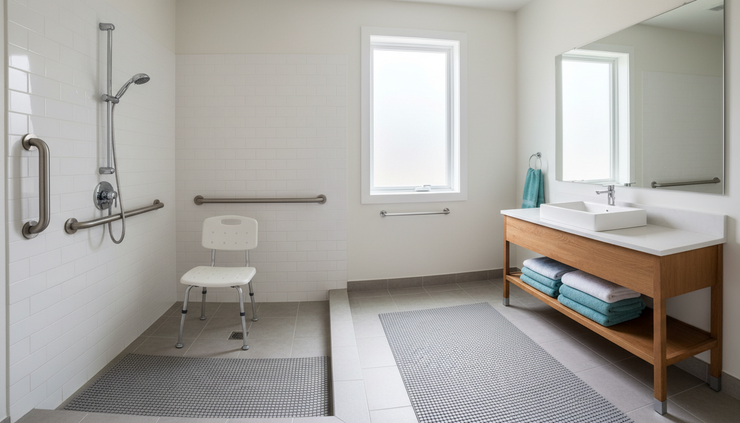
Make the bathroom safer
Simple changes can reduce fear and prevent accidents.
Useful options include:
Grab bars installed properly into the wall
A shower chair or transfer bench
A handheld shower head
Nonslip mats inside and outside the tub
Night-lights along the path to the bathroom
A raised toilet seat
Easy-to-reach towels and toiletries
Avoid relying on towel bars for support. They are not designed to hold body weight.
Simplify the routine
A long routine can feel overwhelming. Break it into smaller steps.
For example:
Wash face and brush teeth after breakfast
Bathe on set days of the week
Lay out clean clothes the night before
Use pump bottles and easy-grip tools
Keep wipes nearby for quick freshening between showers
A written checklist can help some parents. For others, it may feel insulting. Match the tool to the person.
Bring in help when needed
Family help works for some tasks, but not all. A parent may feel more comfortable with a trained aide helping with bathing than with an adult child. In-home care can support bathing, grooming, dressing, toileting, laundry, and light housekeeping, depending on the care plan.
If hygiene needs are frequent, physically demanding, or tied to memory loss, outside help can protect both dignity and safety. It can also reduce tension between parent and child.

When the need for help is becoming urgent
Some signs suggest your parent may need more than light reminders or small home changes.
Take action soon if you notice:
Repeated falls or near-falls in the bathroom
Strong urine or fecal odor that continues after laundry and cleaning
Skin sores, rashes, or open areas
Not bathing for long stretches of time
Dirty clothing worn for several days despite clean clothes being available
Confusion about basic hygiene steps
Unsafe bathroom habits, such as leaving water running
Refusal to change soiled clothing
Weight loss, dehydration, or missed medications along with poor hygiene
This does not mean your parent must leave home. It does mean the current level of support may not be enough. A medical checkup can help identify treatable causes, and a home safety assessment can show what changes would help.
If siblings or other relatives are involved, keep the focus on observed facts. Instead of saying, “Mom is not taking care of herself,” say, “I visited twice this week and noticed the same clothes, a strong urine smell, and unused towels.” Specific details make it easier to plan without blame.
The real sign to look for
The most important sign is not one stain, one skipped shower, or one awkward moment. It is a change from your parent’s normal pattern that affects comfort, safety, health, or confidence.
When daily hygiene starts to slip, respond with curiosity first. Ask what feels hard. Look for pain, fear, memory changes, poor bathroom setup, or fatigue. Then add support in a way that protects dignity.
A parent who needs help with daily hygiene does not need criticism. They need practical care, respectful choices, and a safer routine that helps them feel like themselves again.


Comments